| Welcome, Guest |
You have to register before you can post on our site.
|
| Online Users |
There are currently 9 online users.
» 0 Member(s) | 5 Guest(s)
Applebot, Bing, Google, Yandex
|
|
|
| Beccafumi |
|
Posted by: Paul Ferguson - 01-16-2023, 11:36 PM - Forum: Alchemical symbolism and imagery
- Replies (2)
|
 |
If you have $239,239.96 to spare then you might like to invest in a copy of Domenico Beccafumi's La ricerca e lo sfruttamento dei metalli.
'The series begins with the gods observing the alchemist in his laboratory, proceeds via an initial meeting, to the gods alarm at possible capture and, perhaps, the intended use to be made of them and their properties, their capture and enchainment by the alchemist and, finally, the gods being lead to the anvil. The alchemist s assistant, most likely symbolic of Vulcan, does the work, while the alchemist in pensive mode, looks on as director, scholar and philosopher. The second group of five plates, while appearing to be simpler, at least in thematic terms, is made more complicated by having no clear pictorial conclusion.'
At Abebooks:
https://tinyurl.com/2s4jdd7j
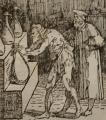
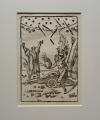
I love the authoritative figure of the alchemist in these engravings, pushing the gods around, thus reversing the usual man-god paradigm, and getting the assistant to do all the hard work.
|

|
|
| The “Ingendred” Stone: The Ripley Scrolls |
|
Posted by: Paul Ferguson - 01-12-2023, 05:07 PM - Forum: Articles on alchemy
- No Replies
|
|
Aaron Kitch situates the Ripley scrolls in the context of English alchemy in the sixteenth century, especially the tradition of emblematic alchemy and John Dee’s efforts to establish George Ripley as England’s chief alchemical authority. He analyzes the pattern of imagery on the scrolls in relation to the ancient and early modern philosophy of generation, which focused on questions about sexual reproduction and the emergence of new matter in nature.
https://www.bowdoin.edu/profiles/faculty...crolls.pdf
|
|
|
|
| University of Bologna research |
|
Posted by: Paul Ferguson - 01-12-2023, 11:15 AM - Forum: Articles on alchemy
- No Replies
|
|
Can alchemy be described as a protoscience? Do ancient texts with obscure formulas and procedures describe mystic rituals and allegoric visions? Or do they record instructions to carry out real scientific experiments? In other words, can alchemy be considered the ancestor of chemistry?
A group of scholars at the University of Bologna comprising philologists, historians of science, and chemists has attempted to answer these questions. To do so, they not only revived and studied ancient alchemical texts in detail but also put the described procedures into practice in the laboratory. The results of this interdisciplinary work - developed within the AlchemEast ERC project awarded to Prof. Matteo Martelli, Department of Philosophy and Communication Studies - have been published in the journal PNAS.
https://www.eurekalert.org/news-releases/958189
https://www.pnas.org/doi/10.1073/pnas.2123171119
|
|
|
|
|