Email:        adam@alchemywebsite.com
Address :   Adam McLean, 15 Keir Street,
                    Glasgow, G41 2NP, U.K.
Telephone : 0141 429 5614
                    0044 141 429 5614 internationally

                
  Click for access to
  different sections


Currency convertor


Atalanta fugiens CD-Rom
Emblems and Music

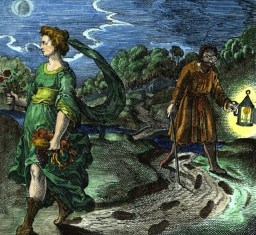
Atalanta fugiens by Michael Maier was first published in 1617 at Frankfurt at the press of Johann Theodor de Bry. This alchemical emblem book included 50 engraved emblems with an associated 'fugue' or musical canon. In a sense this book with its integration of image, text and sound was one of the first attempts at multimedia.
This CD-Rom provides a modern multimedia approach to the Atalanta fugiens. To make the emblematic images more accessible to the modern eye, Adam McLean has hand-coloured the images, and has also re-created the music and made it more approachable to contemporary ears by programming it for a modern synthesiser. The music was originally devised as Latin verses sung in three parts.


This CD-Rom includes three animated slide shows.
atalanta.exe This presents the text of the motto then each image in sequence while the associated music plays for about 30 seconds. It runs for 28 minutes.
atalanta2.exe This presents each image in sequence without displaying the mottos, while the associated music plays for about 30 seconds.
atalanta3.exe This quickly steps through the 50 emblems without the music or the mottos. It is looped to run continuously until stopped by the esc key.

The images
I have hand-coloured each image using watercolours taking a relatively conservative approach, using as far as possible naturalistic colouring, but with a care to incorporate the symbolic use of colours in alchemical illustrations. I have drawn on my experience of the watercoloured illustrations found in many alchemical manuscripts and the style of colouring follows the conventions of such manuscripts.

The music
For this CD-Rom I have orchestrated the music and played it through a multi-timbral synthesiser (Yamaha SY77) which incorporates sampled instruments. I have used a wide palette of instruments to provide variety, a number of horns (french horn, flugel horn, trumpets), woodwind (oboe, clarinet, bassoon, flute), harp, harpsichord, and some strings, organs and orchestral sounds. I have avoided any modern entirely synthetic sounds as well as the piano. The general sound can be likened to an early music group, but of course with no pretentions to authenticity. Purists will of course deplore my approach, but I hope it might make some of the music much more accessible. In working with these 'fugues' I have found many of them to be enjoyable and memorable pieces of music.
The 50 musical pieces are two-part canons over a cantus firmus base. The first voice, which always appears on the right stereo channel, is the fleeing Atalanta. She is pursued by the second voice, Hippomenes, following a short interval later, which I have mapped to the left channel. The three golden apples, the base, is in the centre of the stereo space. I have used no particular system for choosing the instruments to play each 'fugue', and this entirely reflects my own taste and judgement. The output from the synthesiser has been 'fattened' or enriched by using stereo chorus, and is further run through the effects processor to provide a simulation of the reverberation experienced in a preformance space. People with a trained musical ear probably detest this, but I find it does enrich the sound of the three instruments.

  Pay in US Dollars               
  through the Paypal system
          Pay in UK pounds               
  through my UK Secure Trading system
  $22           £11 UK pounds


System requirements: Windows 95/98 (minimum) and all later Windows operating systems. CD-Rom drive. Standard soundcard with stereo output. Standard 800x600 monitor (best wiewed in 16 bit high-colour or 24 bit true-colour). The music is recorded as 'wav' sound files, and so does not require a midi setup. The program is not computer intensive and will run on a basic system.
These slide shows are written for Windows 95 and above, and will not run on Windows 3.1 or the Macintosh operating system. [Some Macintosh users have reported that programs such as these can be run on the Mac using VirtualPC with Windows98 installed, however, I cannot guarantee that this will work as I have no way of testing it or giving support.]